Search

Type your text, and hit enter to search:

Holy Trinity Church Bottisham - A brief guide
 

Holy Trinity church is a Grade 1 listed building built on a ridge a few metres above the adjacent ancient route which ran from the fens to the chalk hills to the east. It is thought that some form of building existed on the site before the present church was built. An early Norman church certainly existed, and there is some evidence that parts of a wooden building were found when the tower was built. 

The present church is a sizeable late C12th church with much rebuilding in the C13th . In the C 14th the nave was raised and a clerestory inserted to create a spacious lofty interior. The C14th work is thought to have been paid for  by Elias de Beckingham, a native of Bottisham who served as Justice of the Common Pleas under Edward 1. His gravestone is on the floor at the east end of the nave. 

Holy Trinity is unusual for the area, mostly built of stone and clunch. Clunch is a traditional building material of chalk limestone rock used mainly in eastern England and Normandy. It is particularly soft when quarried and subject to chemical and wind erosion but hardens on drying.  There is clear evidence of the wearing of the stone in the church structure. The flints on the outside nave walls were possibly knapped in Norfolk and the flooring bricks inside the church came from Holland. 

The Galilee. As you approach the church from the road you will see that there is an extension to the tower. It has been suggested that this two- storey extension built in the C13th was influenced by the mason at Ely Cathedral, which has a beautiful Galilee of a similar date. The Galilee could have been used by a retired priest or benefactor. 

The Tower. The tower is an important part of the church overlooking the houses of the village and was possibly used in past conflicts as a look out for the movement of roving bands. The original Norman nave was as wide as the church tower; however, the nave was widened and now the aisles rather unusually embrace the tower. It is suggested that the tower originally had a wooden spire, removed in the Middle Ages due to damage by high winds and lightning strikes. 

The Bells The bells have been a part of village life in Bottisham for over 400 years. The oldest bell was cast around 1590 and the original frame was made for 4 bells with a treble added in 1839.  In 1929 the 5 bells were rehung on a new oak frame and in 1976 a treble loaned to the church from Kirtling completed the ring of 6. There was a major renovation in 2015 to refurbish the bells and improve the way they are handled. 

The Nave (exterior) Important changes occurred in the 13th and 14th centuries. The nave was widened; the roof pitch was reduced to cater for the weight of the lead roof and mullions incorporated in the windows allowing them to be larger and enabling more light into the church. Tomb Recesses. Beneath the nave windows of the south aisle are the arches of 5 tomb recesses. The flint work is notable, knapped to give a perfect fit. It is assumed that the tombs are those of dignitaries from the Augustinian Priory in Anglesey. 

The Nave (interior) The nave is lofty with fine arches of the C14th. The tomb recesses seen on the exterior South aisle are repeated inside as recesses extending from below the second to the sixth window. After a serious fire in 1992, the pews were lowered to floor level, and damaged ones at the front were replaced by a platform extending into the nave from the chancel. The pews in the north aisle were removed in 2020 as part of extensive work to repair dry rot. Tiling was used to refloor this area. The Fairhaven family of Anglesey Abbey have their arms in the little chapel at the southwest corner of the nave, designed by Richardson in 1952. 

Organ and western gallery In 1869 a six- tiered organ loft was built on which the original Joseph Walker Grade 2 listed organ still stands. Until the second half of the C19th musicians and choir were in the gallery, never in the chancel. A Dutch electronic organ was installed in the Jenyns family pew in 1982 and is now used for all services.  

The Font In earlier times only those who were baptised could pass the font. The present font is C13th, simple in design and heavily restored in 1840. Remains of a typical Norman font can be seen in the Allington Chapel. 

The Pulpit The oak pulpit reconstructed in 1875, was donated in memory of Charles and Rose Jenyns. The Jenyns are a prominent family, owners of Bottisham Hall, with ancestry associated with Allington Manor.  Sir Roger Jenyns was bestowed the honour of knighthood and was High Sheriff for the county in 1701. 

Allington Chantry/Chapel. The Allingtons, a powerful family in the County of Cambridge were also involved in the building of Westminster Hall and later, great benefactors of Anglesey Abbey. The chapel was built for William and his wife Joanna in 1474. Later the chapel was blocked off until the restoration of the church in 1839, when a wooden screen was positioned. The William Allington tomb with its Purbeck marble top marks the south side of the chapel.  On the east wall of the chapel there stands the white marble memorial to the’ Little Strangers’. These are Lionel, aged 2, and Dorothy, aged 3 months, children of William Allington and Elizabeth. They both died in 1638 three years after the plague in London. 

South Chantry/Chapel.  In this chantry is the memorial to Sir Roger and Lady Elizabeth Jenyns. Where the altar would have been there is now a monument, figures of Sir Roger (died 1740) and Elizabeth (died 1728) seated on rolled mats. Sir Roger was the first Jenyns to own Bottisham Hall, which he bought from the Allington family. On Elizabeth’s death Sir Roger Jenyns, at her request, founded Jenyns Free School for 20 poor children. This included clothing them and teaching them. The school building erected in1730, was in Town Street (now High Street) a short distance from the church and is now a private house. The school plaque can be found fixed high on the south wall. 

The Chancel The chancel structure and windows were considerably modified in the C13th. It was heightened in the C15th, restored in 1840, and again in 1875.The plain glass windows are 15th and 16th century. The stained-glass memorial window was installed in 1875.  The Purbeck marble reredos, back of the altar, built in 1875, as part of the memorial to Colonel Soame Jenyns has three two-centred arches. Set in the south wall of the chancel are three early English arches forming three sedilia. These were seats for the celebrant, deacon and sub-deacon during certain parts of the medieval high mass. Immediately east of the sedilia is a double piscina. The piscina was used for cleansing of the communion vessels and when the priest washed his hands.  On the south wall is a framed embroidery. In 1935 it was recorded that Lord Fairhaven of Anglesey Abbey offered a handsome piece of embroidery suitable for an altar frontal. Memorial window. On the east wall you will find a memorial window to Colonel Soame Gambier Jenyns. His funeral in 1873 was a major event in the village. The funeral procession from Bottisham Hall involved a column of Hussars and a military band. After the coffin was laid to rest in the family vault, a firing party stationed outside the south wall fired the customary three volleys followed by a flourish of trumpets. An historical event explains the reason for such an important day in the history of the church and village. On 5th September 1856 Colonel Jenyns returned to Bottisham from Balaclava. He was one of the few survivors of the ‘Charge of the Light Brigade’. On the north wall of the chancel an engraved bronze plate records the Colonel’s war achievements and his death. The memorial window was subscribed by his regiment and friends. 

The Stone Screen The stone screen is Perpendicular. The primary purpose of the screen was to guard and fence the chancel  and could have originally included a tympanum which would have filled the space above the screen to the chancel arch. It is thought the current stone screen at Bottisham was built when Edward IV gave permission to open up the chancel. The C14th oak screens, now sited around the chapels, at one time stretched across the nave, and originally had a loft and gallery. They formed part of the rood loft; the term screen was not used until 1525. 


Compiled by Ian Cole with additions and amendments from Sarah Maxwell, Mike Young and Stuart Field 

Acknowledgements: “Holy Trinity Church Bottisham, a history”, 5th edition 2010 by Hugh H Rogers (Yellow booklet available in the church). 

“The Bells of Holy Trinity Church Bottisham” compiled by Christine Hammond 2015.  


Glenys
Hello and welcome to our church. If you are a new visitor, we have a page for you to get to know us and learn more about planning a visit.
Click here to see more.

Planning your Visit

A Very Warm Hello! 

The following information is specifically for those planning a visit, so that you know, beforehand, what to expect on a Sunday morning.

Where and When

We meet at each church at least one Sunday in the month. Please see each church on the 'Our Churches' page for details of when the service are. For your first visit, we recommend arriving 10-15 minutes early to ensure you get a parking space and find somewhere to sit before the service begins. When you arrive, you will be greeted by someone who will give you the service booklet and hymn book, they can also answer any questions you may have. Please do let them know if you have mobility challenges and will need communion brought to you.

We serve tea, coffee and biscuits after the service. This is a great way to meet our welcoming church members, or simply take time to find your bearings. All refreshments are free.

Our Service

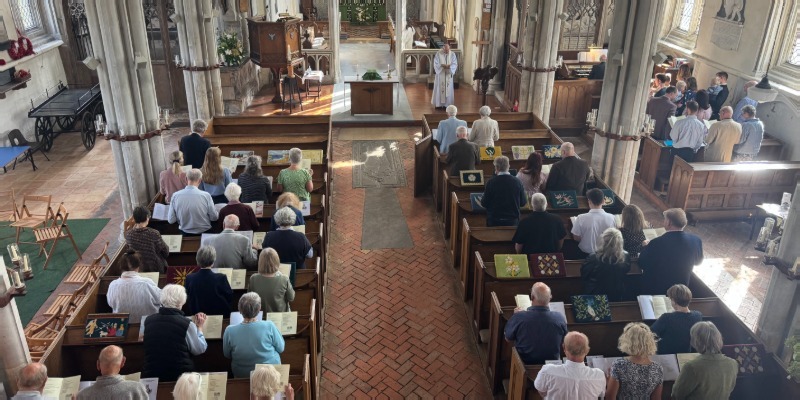
The main service begins with notices about the benefice. Then follows a time of worship with hymns, prayers, scripture readings, a sermon based on scripture and the Eucharist (Holy Communion). 
Services banner

What about my children?

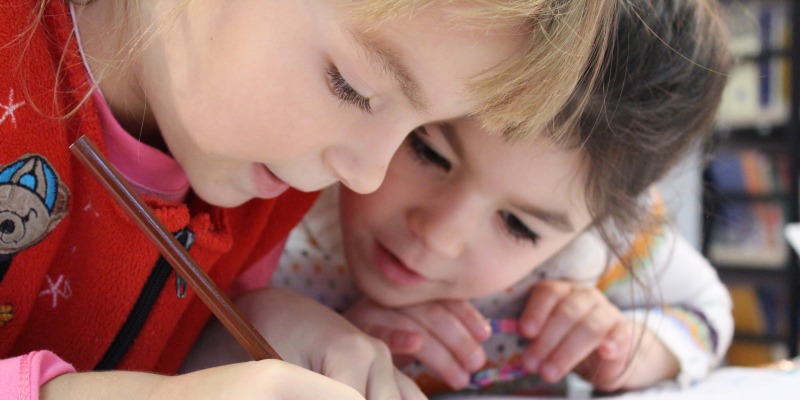
Each church has a children's area with toys and books for the children to play with, we ask that a grown up is with them at all times. Children are also very welcome to be with grown ups in the congregation where they can see and hear everything that is happening.

Children

Getting Connected


Small Groups

While Sundays are a great way to meet new people, it is often in smaller gatherings that you can really get to know someone. Being part of one of our small groups allows you to make new friends, share together and support each other. We have a variety of groups that meet throughout the week/month, some afternoons and some evenings. Check out Small Groups and see if there’s one that you could join, or we can put you in touch with a small group leader who will be more than happy to invite you along to their group.

Serving and Volunteering

If you want to get involved in the life of the church and help us make Sundays run smoothly, you can sign up to serve on a team please contact our Administrator who will put you in touch with the relevant people. 

Leadership 
IMG 9935 (1)   IMG 9647 (1)
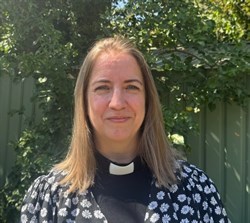
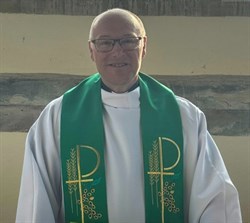
Vicar: Rev'd Max Osborne   Assistant Curate: Rev'd Sian Binley
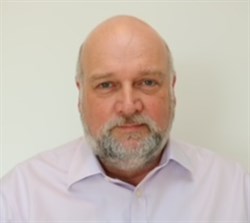
Keith Morrison    
Associate Priest: Rev'd Keith Morrison    
 
We hope that whoever you are, you will feel at home at our church.

Best Wishes

Rev'd Max, Rev'd Sian & Rev'd Keith